VIS brought Galileo’s Legacy to Kraków for a public panel and school workshops exploring science as a bridge between countries. Following its debut at the Italian Pavilion of Expo 2025 Osaka, the project featured Galileo VR in Polish and a discussion on public trust, research freedom and international scientific cooperation.
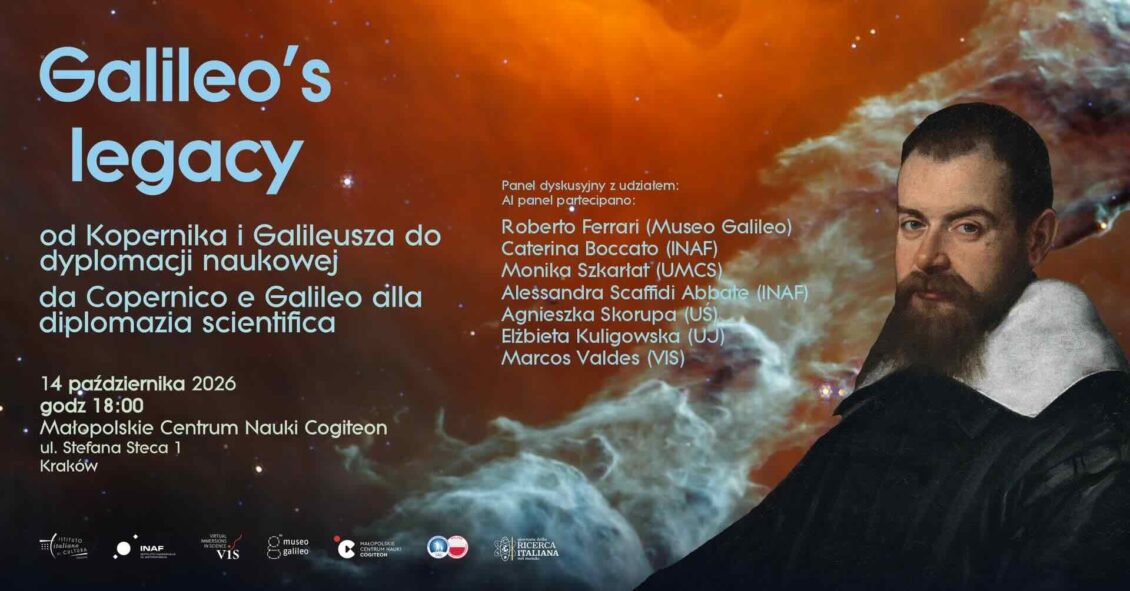
On 14 and 15 October 2026, VIS joined Galileo’s Legacy, an international project connecting the history of astronomy with contemporary questions of science diplomacy, public engagement and international cooperation. The initiative took place at the Małopolskie Centrum Nauki Cogiteon in Kraków and formed part of the celebrations for the Italian Research Day in the World, promoted by the Italian Ministry of Foreign Affairs and International Cooperation.
The project was originally developed by INAF, VIS and the Museo Galileo for the Italian Pavilion at Expo 2025 in Osaka. Kraków hosted its first international stage after Japan, extending a dialogue that begins with two figures who link Italy and Poland: Nicolaus Copernicus, who studied at the University of Kraków and later in Padua, and Galileo Galilei, who taught in Padua and used his telescope between 1609 and 1610 to gather evidence supporting the Copernican system.
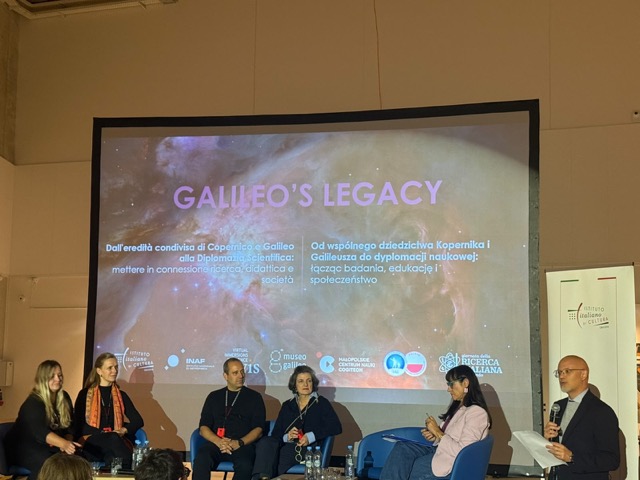
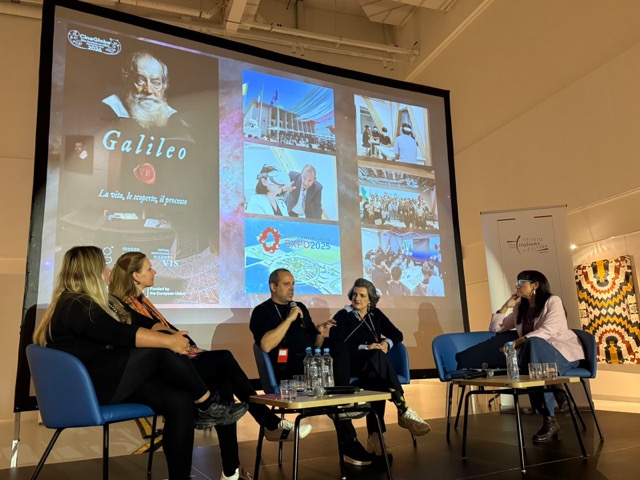
On Wednesday 14 October, the public panel Galileo’s Legacy – From Copernicus and Galileo to Science Diplomacy examined how science can create common ground between countries. The discussion addressed public understanding of science, trust in research, academic freedom and the international collaboration required to develop large scientific infrastructures. It also considered the role that scientists, institutions and diplomatic networks can play in responding to global challenges that no country can face alone.
The panel was moderated by Caterina Boccato (INAF), national coordinator for education and outreach at the institute and former National Outreach Coordinator for Italy of the International Astronomical Union. Speakers included Roberto Ferrari, Director of the Museo Galileo in Florence; Alessandra Scaffidi Abbate, Head of Internationalisation at INAF’s Scientific Directorate; Agnieszka Skorupa of the University of Silesia, who studies human performance in isolated, confined and extreme environments; Elżbieta Kuligowska of the Jagiellonian University, astronomer and science communicator; and Marcos Valdes, astrophysicist, co-founder and CEO of VIS.
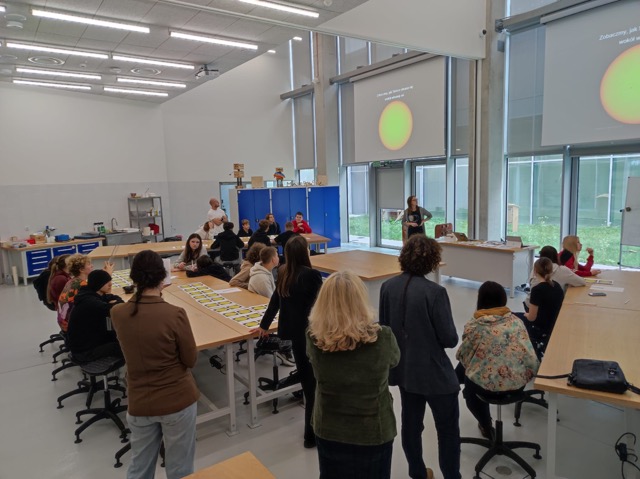
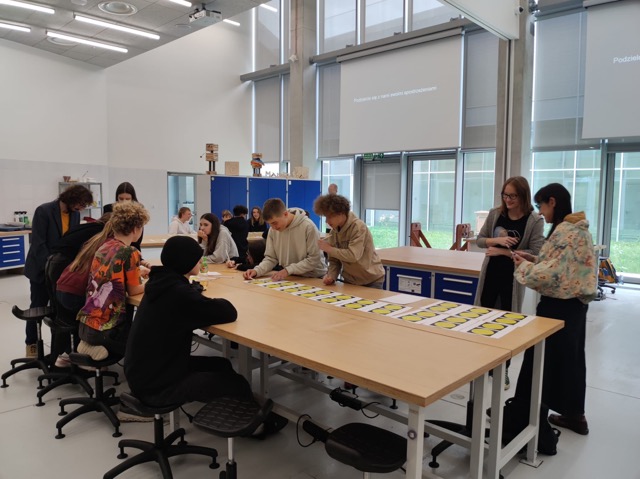
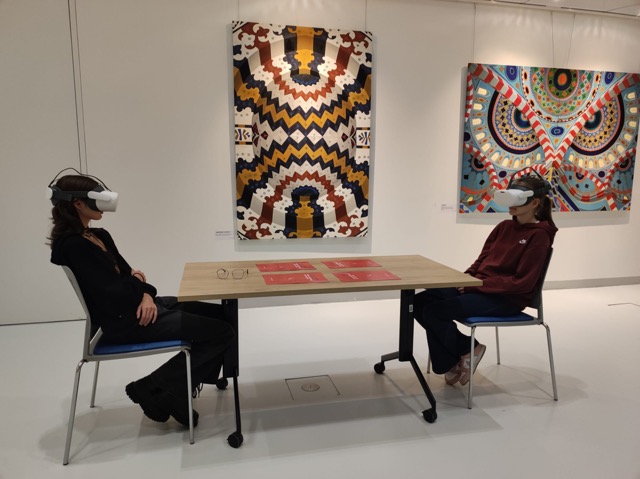
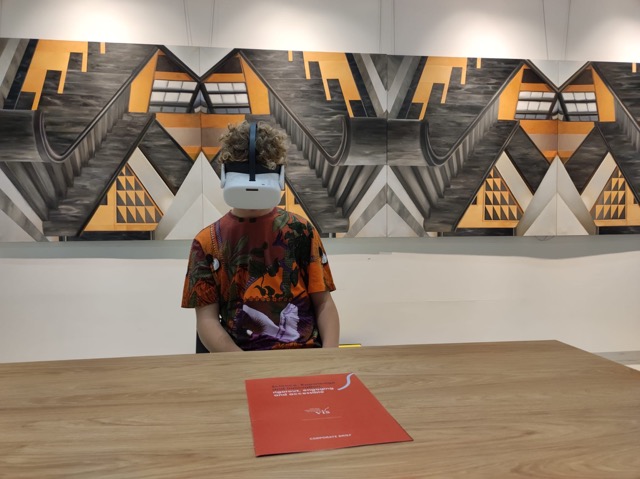
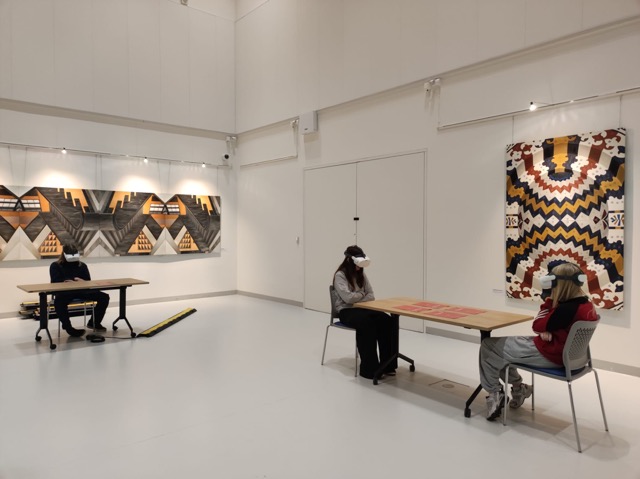
The following morning, on Thursday 15 October, Cogiteon hosted the second part of the programme: educational workshops for high-school students. The activities included Galileo VR – The Life, the Discoveries, the Trial, VIS’s 360° virtual-reality film on Galileo’s life, revolutionary discoveries and trial. Produced by VIS in collaboration with the Museo Galileo in Florence, where it is part of the permanent exhibition, the experience was available in Polish for the Kraków event.
From Copernicus and Galileo to today’s international research networks, Galileo’s Legacy reflected on a central idea: science grows through exchange. By combining historical perspective, public dialogue and immersive storytelling, the project invited new audiences to see science not only as a body of knowledge, but as a shared practice built on curiosity, freedom and cooperation.